
 Deutsch
 English

Do you want to do more than just use AI models—do you want to understand how they work technically and develop them yourself? Do you want to learn not to blindly accept AI results, but to critically evaluate them and combine them with solid engineering knowledge? Then enroll in the new Bachelor’s program in AI Engineering and solve the engineering problems of the future with AI—for example, by enabling products to be developed faster, more efficiently, and more sustainably.
The AI Engineering bachelor’s program imparts skills at the intersection of engineering and artificial intelligence. The focus is on the use of Artificial Intelligence (AI) as a tool to support engineering processes. You will learn to apply AI systems in a problem-oriented manner, critically evaluate their results, and link them to technical expertise.
In addition to fundamentals in computer science, mathematics, and engineering, the program emphasizes AI literacy—the ability to understand, critically evaluate, responsibly use, and interact with artificial intelligence—as well as data literacy—the ability to critically collect, manage, evaluate, apply, and interpret data—and the responsible use of AI.
Job Description and Labor Market
The growing prevalence of artificial intelligence is fundamentally changing the way engineers work. Data-driven and exploratory approaches are gaining importance in place of purely deterministic methods. Graduates of the AI Engineering program are prepared to apply AI-supported tools in engineering activities and to interpret and critically evaluate their results from a technical perspective. They combine technical expertise with skills in working with AI systems and contribute to the development of technical solutions that take safety, sustainability, and social responsibility into account. The program thus responds to a growing need for professionals who can integrate AI competently and responsibly into work processes.
- Application of AI in engineering processes
- Support for requirements analysis, design, and simulation
- Evaluation and validation of AI-generated results
- Development of data-driven solutions
- Application of AI in various engineering disciplines
- Integration of AI into technical work processes
- Reflection on impacts on safety and sustainability
- Collaboration between humans and AI in development processes
- Use of AI to increase efficiency
- Work on digital and data-driven systems
What Makes the Program in Clausthal Unique
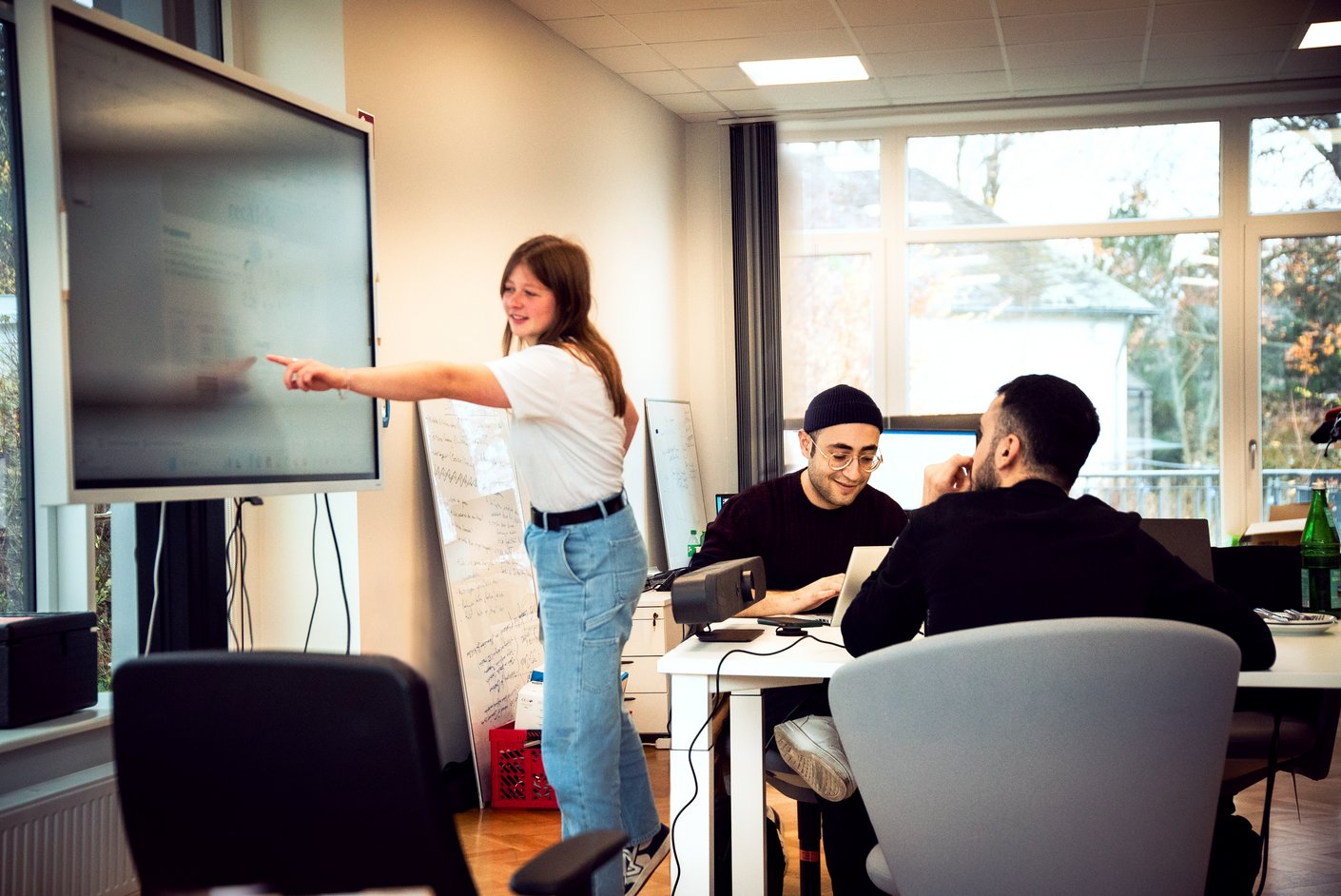
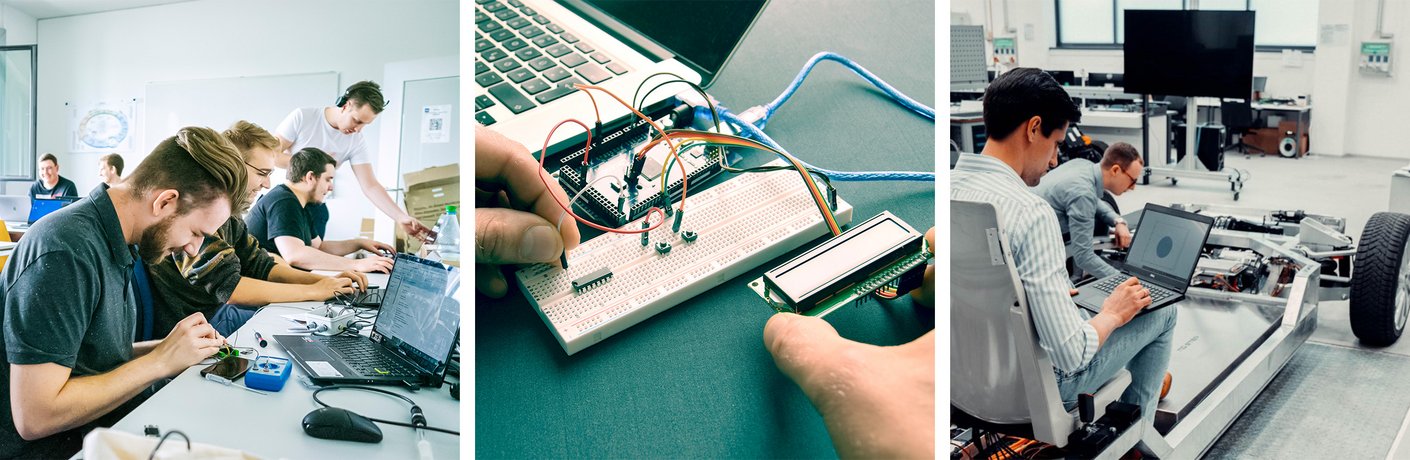
The program consistently follows the “AI as a Tool” approach and focuses on the use of artificial intelligence to support engineering activities. Project-based teaching formats run throughout the entire program and enable students to apply theoretical concepts in real-world contexts. As a student, you will work in small teams on practical assignments and systematically reflect on the use of AI. Close supervision and the interdisciplinary orientation promote individual learning.
Program Structure
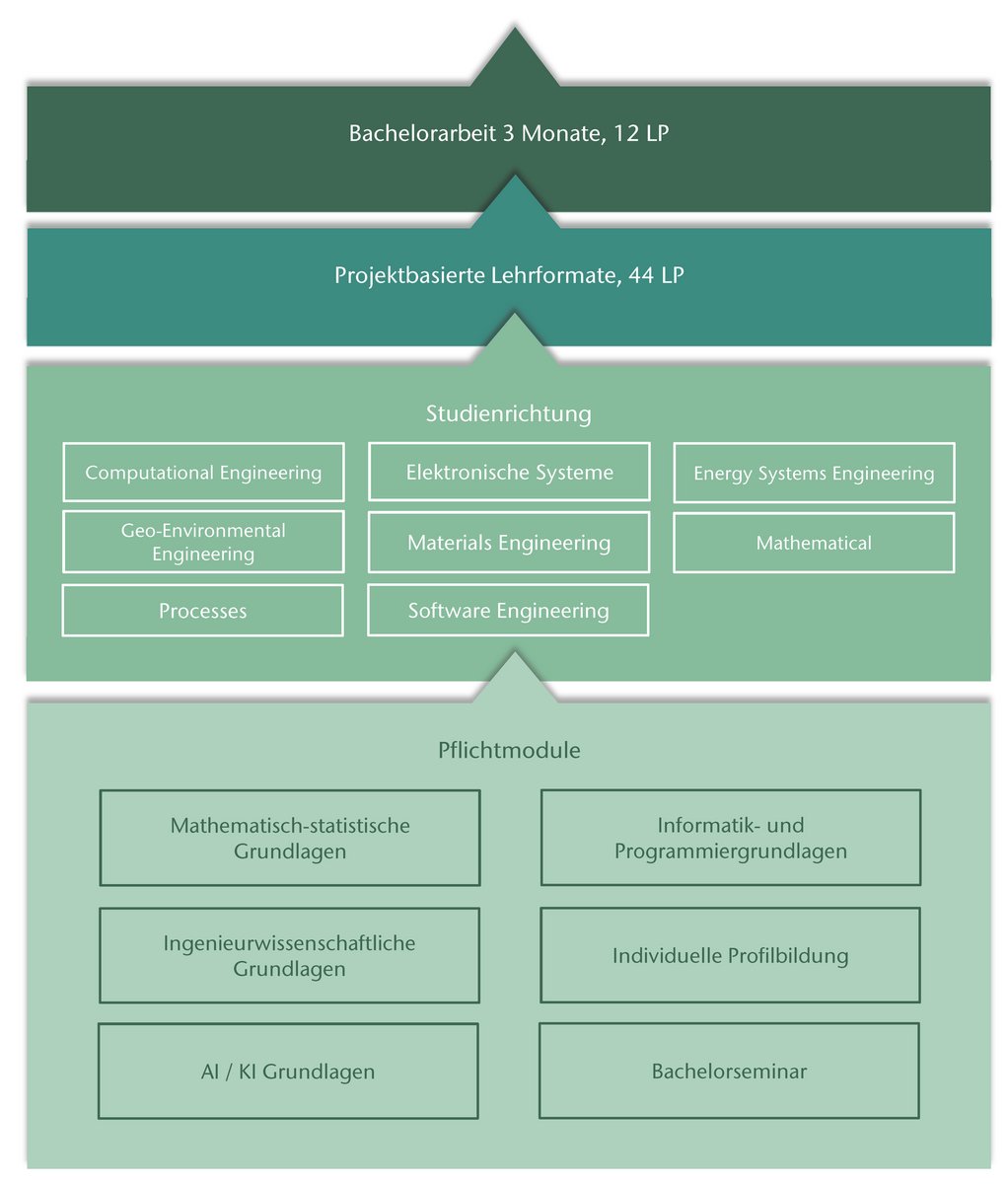
The program is designed as a six-semester bachelor’s degree program. In the first semester, all students acquire a common foundation in computer science, mathematics, and engineering and gain an overview of the program tracks. Starting in the second semester, students select a program track. The foundational training continues through the third semester, after which the focus shifts to the chosen specialization.
Project-based learning runs throughout the program and enables the practical application of course content.
In the final semesters, students develop their individual profiles and complete their bachelor’s thesis. The content of the profiles includes: Fundamentals of Computer Science, Fundamentals of AI, Programming, Engineering Mathematics, Statistics




Prof. Dr. Andreas Rausch
Phone: +49 5323 72-7177
Email: ba.aieng@tu-clausthal.de
de Institute for Software and Systems Engineering
Arnold-Sommerfeld-Straße 1
38678 Clausthal-Zellerfeld
Beginning of studies
Welcome Weeks (before lectures begin)
TU Clausthal supports students as they start their studies with various event formats.
Pre-mathematics course (before lectures begin)
The Institute of Mathematics offers a pre-mathematics course for all first-semester students (in German).
These courses may also interest you
Digital Technologies
Electrial Engineering
Computer Science
Mechanical Engineering
Subsequent Master's degree programmes
Digital Technologies
Electric Engineering and Information Technology
Geoenvironmental Engineering
Computer Science
Intelligent Manufacturing