Master's programs

In many European countries, the Master's degree is the second academic degree that students can obtain at universities as the conclusion of an academic education, and the standard period of study for most Master's degree courses at Clausthal University of Technology is four semesters.

The prerequisite for a Master's degree course is a completed Bachelor's degree course. At Clausthal University of Technology, there are one or more Master's degree courses for each Bachelor's degree course, which are regarded as consecutive, i.e. as a natural continuation (see also the overview of Bachelor-Master branching options). You do not have to go through a separate selection and application procedure to start a consecutive Master's degree program following a Bachelor's degree program.

University transfer students, i.e. people who did not complete their Bachelor's degree at Clausthal University of Technology, can find information on the respective requirements for a specific Master's degree program in the admission requirements on the respective program page. A Master's degree is comparable to the previous Diplom degree. This degree also entitles you to do a doctorate.
These Master's degree programs are available at TU Clausthal

Chemistry * (Master)

Chemistry * (Master)

The Master's degree course is material and process-oriented and offers a wide range of options for individual specialization with the two fields of study

Digital Technologies * (Master)

Digital Technologies * (Master)

The Master's degree program is application-oriented and interdisciplinary. The computer science subjects are further deepened and tested within the digitization

Electric Engineering and Information Technology (Master)

Electric Engineering and Information Technology (Master)

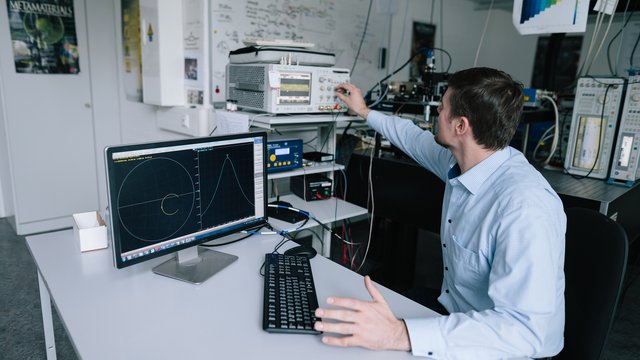
Future autonomous systems in industry and transport require research into measurement, control and automation technology.

Energy and Materials Physics * (Master)

Energy and Materials Physics * (Master)

Energy and Materials Physics offers the unique opportunity of a thematically broad and in-depth education in materials physics and materials chemistry of

Energy Systems Engineering (Master)

Energy Systems Engineering (Master)

The broad training opens up a wide range of fields of activity in all companies associated with the energy transition, especially in management and development

Geoenvironmental Engineering (Master)

Geoenvironmental Engineering (Master)

The Master's course is characterized by its interdisciplinary programme from the fields of applied geosciences, geoinformatics, geomatics, environmental

Computer Science * (Master)

Computer Science * (Master)

Become an expert in current topics in computer science, such as artificial intelligence, human-computer interaction, energy informatics, computer graphics, big

Intelligent Manufacturing (Master)

Intelligent Manufacturing (Master)

Training engineers with problem-solving skills for Industry 4.0 and strong expertise in product development, production and automation technology and data

Mechanical Engineering * (Master)

Mechanical Engineering * (Master)

Students acquire engineering and interdisciplinary qualifications that enable them to work individually in the industries and fields of mechanical engineering.

Materials Science and Engineering * (Master)

Materials Science and Engineering * (Master)

The requirements for the functionality and cost-effectiveness of consumer goods and everyday products are becoming increasingly complex.

Mining Engineering (Master)

Mining Engineering (Master)

Our Mining Engineering students will be trained in a diversity of fields regarding the raw material production.

Petroleum Engineering (Master)

Petroleum Engineering (Master)

Even in times of climate protection and energy transition, fossil fuels such as crude oil and natural gas remain a mainstay of our society.

Technical Business Administration * (Master)

Technical Business Administration * (Master)

Operational decisions are often characterized by a close link between business management and engineering issues.

Environmental Process Engineering and Recycling (Master)

Environmental Process Engineering and Recycling (Master)

Dealing with waste, wastewater and emissions from a technical, economic, ecological and social point of view is the subject of the course.
Process Engineering / Chemical Engineering * (Master)

Process Engineering / Chemical Engineering * (Master)

The Master's program provides in-depth knowledge required for a responsible position, particularly in research and development.

Business Chemistry (Master)

Business Chemistry (Master)

Start of studies in the winter semester 2025/2026, applications possible from June 1, 2025. Business Chemistry combines the subjects of Business Administration

Business Informatics * (Master)

Business Informatics * (Master)

Business informatics performs an interface function between computer science, which is often technically oriented, and application-oriented business

Business and Engineering (Master)

Business and Engineering (Master)

Students are introduced to state-of-the-art research areas in the three focuses they can choose from: production and processes, management of energy and mineral

Industrial / Applied Mathematics * (Master)

Industrial / Applied Mathematics * (Master)

Excellent career opportunities, e.g. in the automotive and aviation industries, in telecommunications and transportation companies, at banks and insurance

The degree programs marked with * can also be studied part-time.